There’s a particular kind of tired that a single massage doesn’t quite fix, the kind that builds up over weeks of back-to-back days, screen time, and not enough proper rest. An Ayurvedic retreat offers a structured opportunity to step away from a busy routine and make time for rest and traditional wellness practices. Rather than a single, isolated treatment, it’s a structured half-day experience that combines consultation, traditional therapies, guided rest, and nourishing food, designed to create dedicated time for rest, stillness, and traditional Ayurvedic wellness practices rather than a single standalone treatment.
At Vibrant Ayurveda, our half-day Ayurvedic retreat brings together several traditional practices into one considered sequence, starting with a personalised dosha consultation and moving through massage, Shirodhara and herbal rituals, with deliberate pauses for stillness built in throughout. This guide walks through what an Ayurvedic retreat actually involves, how it differs from a standard spa day, who tends to benefit most, and how to prepare so you get the most from your time.
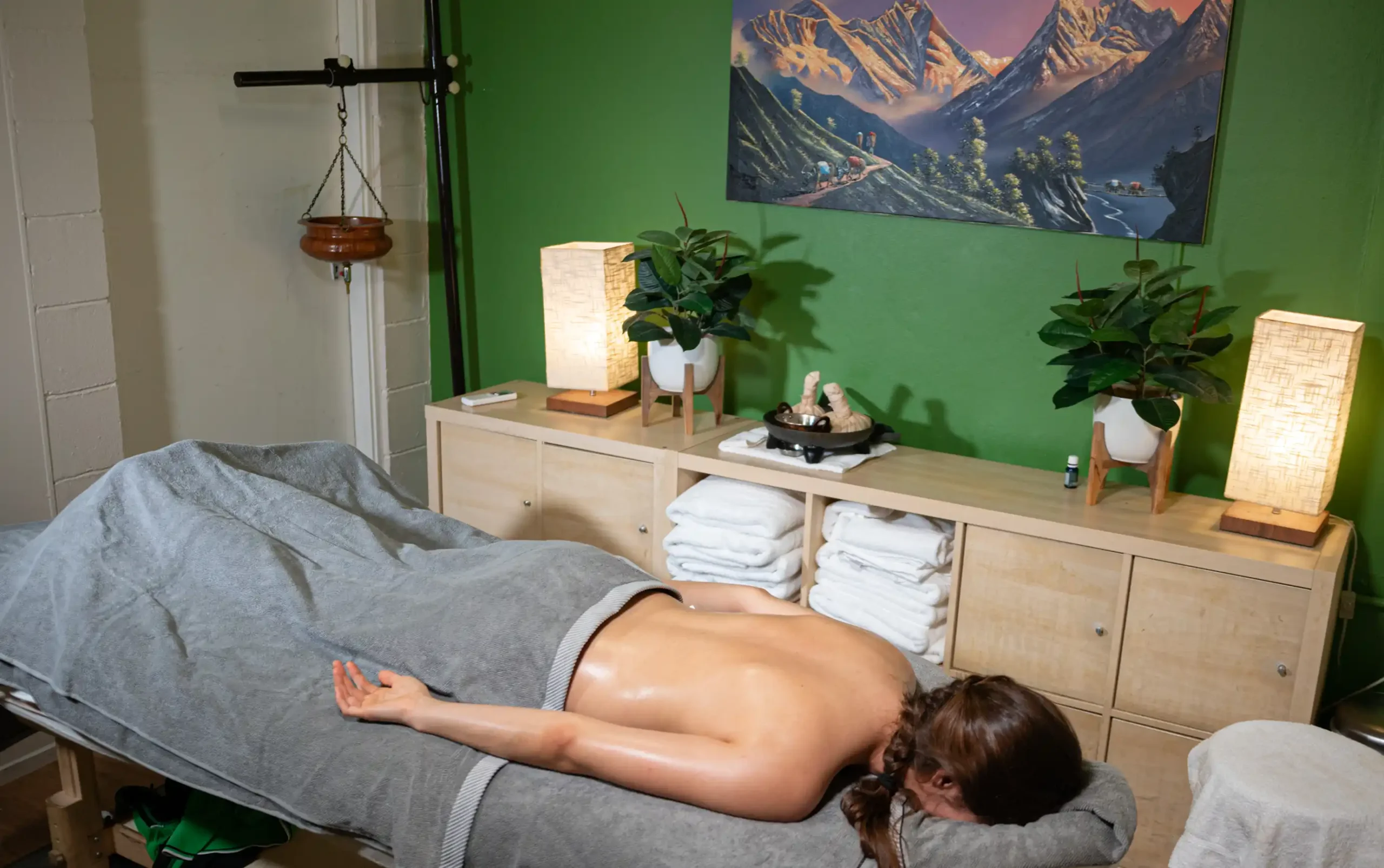
An Ayurvedic retreat is a structured wellness experience that brings together several traditional Ayurvedic practices into a single, guided session, rather than offering one treatment in isolation. Where a single massage addresses one part of the body for a set period, a retreat is designed around a sequence: consultation, treatment, rest and nourishment, offering a continuous experience in which consultation, traditional therapies, rest and nourishment form part of the same retreat.
The exact combination of therapies varies by retreat, but the underlying principle stays consistent across traditional Ayurvedic practice: create a slower-paced environment with dedicated time for rest, quiet and traditional Ayurvedic practices, rather than layering more stimulation on top of an already busy day. This is part of why retreats are typically longer than a standard treatment and structured around pacing, not just the therapies themselves.
A standard spa day is usually built around a menu of treatments you select individually: a facial, a massage, perhaps a mani-pedi, often delivered by different therapists with limited connection between them. An Ayurvedic retreat works differently. It starts with a consultation that shapes everything that follows, uses traditional therapies selected as part of the personalised Ayurvedic consultation rather than simply choosing treatments from a standard spa menu, and builds in periods of guided stillness between treatments rather than moving straight from one service to the next.
The other key difference is intent. A spa day is generally about indulgence or a treat. An Ayurvedic retreat is traditionally framed around creating time for rest, reflection and traditional wellness practices, which is why the pacing, quiet periods and nourishment form an important part of the experience, which is why the pacing, food and quiet periods matter as much as the treatments themselves. Neither approach is better than the other, but they’re solving for different things, and it’s worth knowing which one you’re actually after before booking.
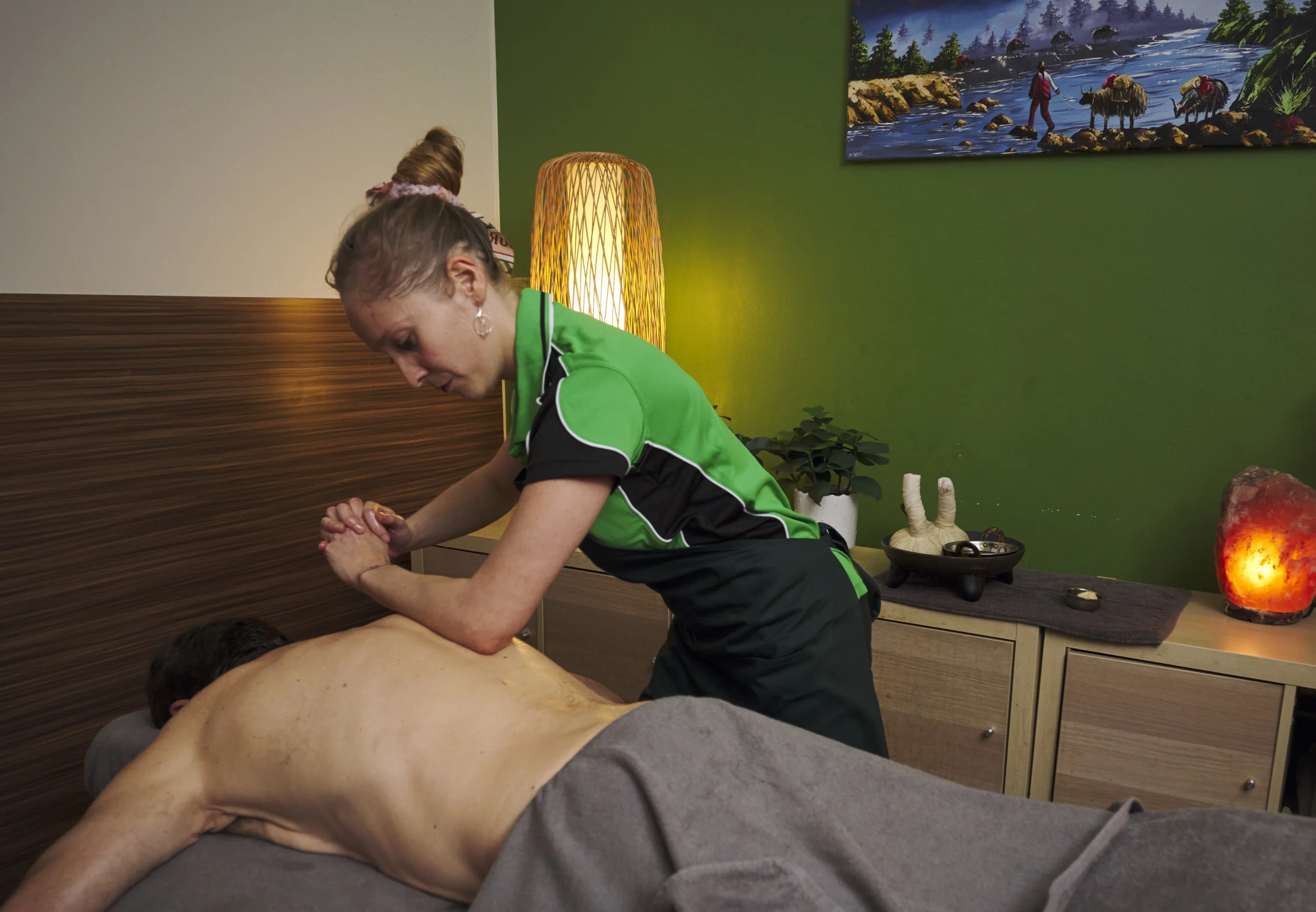
Our Half-Day Ayurvedic Retreat is designed as a complete, guided experience rather than a set of individually booked treatments. It typically spans several hours and follows a set sequence: consultation, treatment, rest and nourishment, with enough built-in spacing so you’re not rushing between stages.
Every retreat begins with a consultation, either with one of our practitioners or with our Vaidya, Dr Pradeep Neupane, to discuss your Ayurvedic constitution, your current wellbeing goals and any specific preferences or concerns you’d like the session to address. This isn’t a formality, it directly shapes which therapies and oils are used during your retreat, and how the pacing of the day is structured. If you’re not sure of your dosha ahead of time, our dosha quiz is a useful starting point, though the consultation itself gives a more accurate picture.
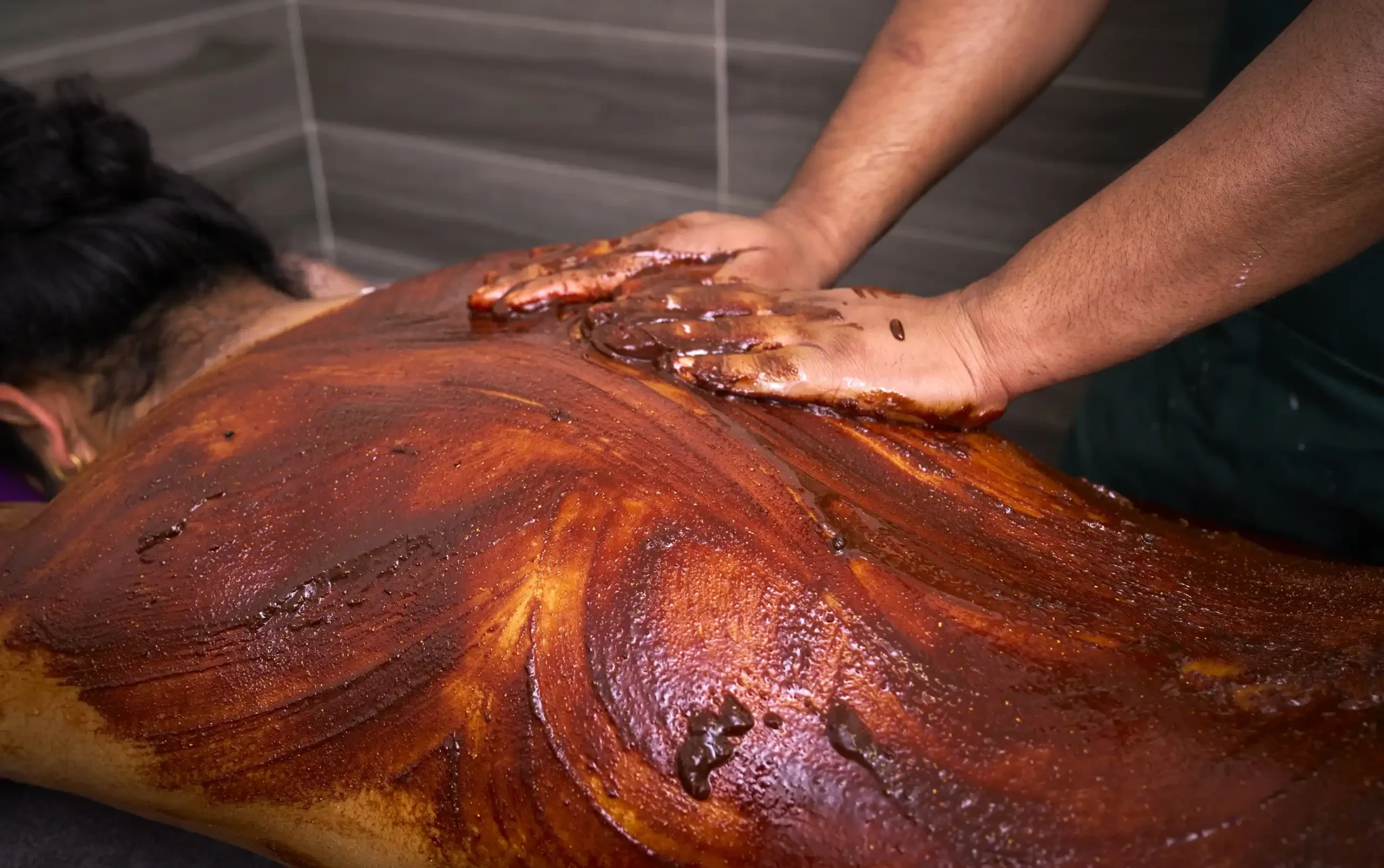
The therapies included in a retreat are drawn from classical Ayurvedic practice and selected to suit your dosha and current needs. This typically includes a full-body Abhyanga massage, a traditional Ayurvedic oil massage that forms part of the retreat experience, alongside Shirodhara, where warm oil is poured in a continuous stream over the forehead, a traditional Ayurvedic practice in which warm oil is gently poured in a continuous stream over the forehead, creating a quiet and contemplative part of the retreat. Herbal rituals, including warm herbal teas and, where appropriate, herbal preparations recommended during your consultation, round out the experience. Each element is chosen to work with the others rather than as standalone add-ons.
A typical half-day retreat begins with your consultation, followed by a guided transition into stillness, often a few minutes of quiet breathing or seated rest, before moving into your primary treatments. Depending on the therapies included, this might mean Abhyanga followed by Shirodhara, with a rest period built in between rather than moving straight from one to the other. The retreat typically closes with a herbal tea and a short period of quiet rest before you transition back into your day, rather than finishing abruptly straight after the final treatment. Exact timing varies depending on which therapies are included, and our team can talk you through the specific sequence when you book.
A retreat day provides sustained, unhurried time away from everyday routines, with periods of quiet, traditional therapies and rest incorporated into the experience. Traditional Ayurvedic therapies such as Abhyanga and Shirodhara form part of the retreat experience and are traditionally associated with the practice’s broader emphasis on relaxation, routine and wellbeing, and this effect is generally considered to build over the course of a longer, guided session rather than a brief, standalone appointment. It’s worth being clear that this is a complementary wellbeing practice rather than a treatment for diagnosed stress or anxiety conditions, and Safe Work Australia’s guidance on psychosocial hazards and mental health is a useful resource for anyone dealing with work-related stress specifically.
Part of what distinguishes a retreat from a single treatment is the deliberate absence of screens and stimulation throughout the session. Phones are generally set aside for the duration of your retreat, and the quiet periods between treatments are intentional rather than incidental, creating a period in which you can step away from your phone and other digital distractions and give your attention to the retreat experience. This screen-free period is simply one way the retreat creates space away from everyday digital routines, and the eSafety Commissioner’s guidance on managing screen time offers useful general context on why stepping away from constant connectivity matters, retreat or not.
Food and drink can form an important part of the traditional Ayurvedic approach and may be incorporated into the retreat experience alongside the treatments. Herbal teas served during your retreat may be selected in keeping with the personalised Ayurvedic approach discussed during your consultation, warming and grounding blends for Vata, cooling blends for Pitta, and lighter, stimulating blends for Kapha, continuing the same personalised approach used throughout the session. Staying properly hydrated matters too, and Healthdirect’s guidance on drinking water and your health and the NHMRC’s water and nutrient reference values are useful general references on daily hydration needs.
A retreat day tends to suit people who feel generally depleted rather than dealing with one specific, isolated complaint, the sense of running on empty after a long stretch without proper rest. For people experiencing everyday overwhelm, the retreat provides an opportunity to slow down, step away from routine demands and make dedicated time for rest and stillness, which is essentially what a retreat’s structure is built to provide over a single afternoon. It’s worth noting that persistent burnout, particularly where it’s affecting work or daily functioning, is worth discussing with your GP alongside any complementary practices you explore, and Safe Work Australia’s psychosocial hazards guidance is a helpful starting point if overwhelm is connected specifically to your workplace.
Ayurveda places significant weight on seasonal alignment, and within Ayurvedic tradition, seasonal changes are often considered when planning daily routines, food choices and wellness practices, with winter commonly associated with warmth, grounding and nourishment. A winter-focused retreat typically leans into warming oils, heartier herbal teas and therapies chosen to support the body through the colder months, rather than using the same approach year-round. This seasonal framing is one of the more distinctive aspects of Ayurvedic practice compared to more generic wellness offerings, and it’s a good reason to consider a retreat at a change of season rather than only when you’re already feeling run down.
Loose, comfortable clothing is worth wearing to your retreat, ideally something you don’t mind picking up a little oil on, given the massage and Shirodhara components. It’s generally best to arrive with a light stomach rather than straight after a heavy meal, and to avoid caffeine in the hours immediately beforehand if you can, particularly if you want to arrive feeling comfortable and ready for a slower-paced retreat experience. Bringing a change of clothes for afterwards, particularly for your hair after Shirodhara, is a practical addition many clients appreciate.
The benefit of a retreat day tends to extend further when you protect some quiet time immediately afterwards rather than heading straight back into a full schedule. Your practitioner can provide specific aftercare guidance, including advice about when to shower after an oil-based treatment, and a gentle, unhurried rest of the day, rather than strenuous activity, can help you maintain the quiet, unhurried pace of the retreat for the remainder of the day. Some clients find it useful to carry one or two elements of the retreat into their routine afterwards, a few minutes of quiet stillness in the morning, or a herbal tea in place of a stimulant in the evening, as a way of extending the benefit beyond the day itself. The Department of Health and Aged Care’s mindfulness program resources and Better Health Channel’s guidance on stress are both useful if you’d like to build a simple ongoing practice around what you experience during your retreat.
An Ayurvedic retreat isn’t just a longer massage; it’s a considered sequence of consultation, traditional therapy and genuine rest, built around giving your nervous system the time it actually needs to settle. Whether you’re dealing with everyday overwhelm, marking a change of season, or simply want a more complete experience than a single treatment offers, the structure of a retreat is designed to support that.
If you’re ready to experience it for yourself, explore our Half-Day Ayurvedic Retreat or book a consultation with our team first. You can also get in touch if you have questions about which retreat option suits you before booking.