An Ayurvedic head massage is a traditional wellness practice that typically involves massage of the scalp, head, neck and shoulders, often using warm herbal oils. The experience may vary depending on the practitioner, the techniques used, and the individual’s preferences.
While head massage is often associated with relaxation and wellbeing, experiences can differ from person to person. In this guide, we’ll explore five commonly discussed aspects of Ayurvedic head massage, explain how it differs from Shirodhara, and outline what you can generally expect from a session in Brisbane or on the Gold Coast.
Ready to Experience Ayurvedic Head Massage?
Learn more about Ayurvedic head massage and what to expect from a session. Contact the Vibrant Ayurveda Team to discuss your preferences and available appointments in Brisbane or on the Gold Coast.
An Ayurvedic head massage is a treatment using warm, herb-infused oils applied to the scalp, temples, and neck with specific traditional massage techniques. It’s built on principles from classical Ayurveda, where the head is considered a key area for balancing Vata, the dosha associated with the nervous system and mental activity.
This is different from a standard scalp rub you might get at a hair salon. A salon scalp massage is typically a short, generic addition to a haircut or wash, with no assessment of the individual or specific oil selection involved.
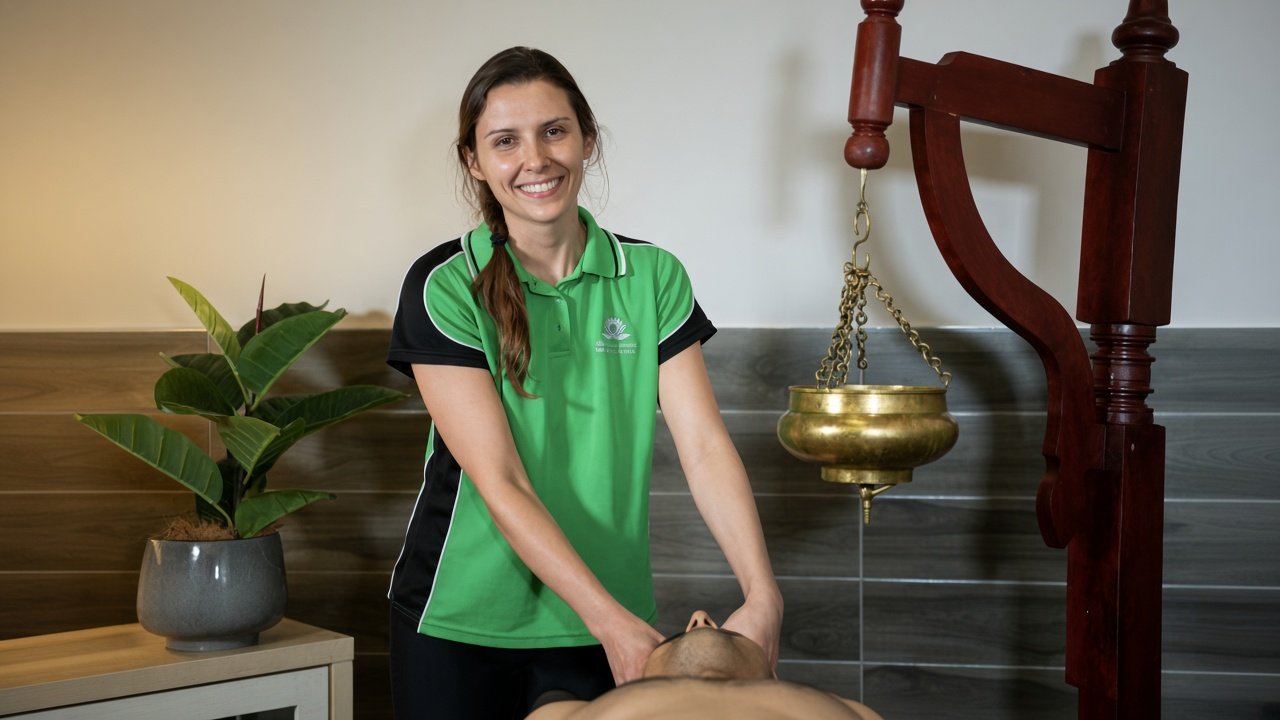
In an Ayurvedic session, the oil used and the technique applied are chosen with your individual constitution and current state in mind, following a consultation. The session itself usually combines rhythmic pressure techniques with the warm oil, working through the scalp, temples, and often the neck and shoulders as well.
Ready to experience the difference?
Book Your Ayurvedic Head Massage
The scalp and temples carry a surprising amount of tension, especially for people doing screen-based work for long stretches of the day. Focused massage in this area is traditionally used to encourage the body’s relaxation response, helping shift you out of a stressed, alert state.
The warm oil itself plays a role too. In Ayurvedic tradition, warm oil applied to the head is believed to have a grounding, calming effect, particularly for people who feel scattered, overstimulated, or mentally “wired.”
It’s worth being clear-eyed about the evidence here. According to the U.S. National Center for Complementary and Integrative Health, research on massage therapy broadly points toward a beneficial effect on stress and relaxation, though much of this evidence is still preliminary. What most people notice, and what the evidence broadly supports, is a genuine sense of calm during and immediately after a session, rather than a guaranteed long-term fix for chronic stress on its own.
Need a reset after a stressful week?
Explore Our Shirodhara Treatment
Many people book a head massage in the evening specifically because of how it tends to affect their ability to wind down. In Ayurvedic tradition, this connects to the therapy’s calming effect on Vata, the dosha linked to overactive thinking and restlessness, particularly common before bed.
The warm oil and slow, rhythmic massage technique work together here. The physical warmth is soothing on its own, and the repetitive, gentle pressure is traditionally associated with quieting mental chatter rather than stimulating it, unlike a brisker, more invigorating massage style.
A head massage isn’t a treatment for a diagnosed sleep disorder, and if you’re dealing with persistent insomnia, that’s worth raising with your GP. As the Better Health Channel, the Victorian Government’s health information service, notes, consistent sleep hygiene habits are a foundational part of managing sleep difficulties, and a relaxing evening routine like an Ayurvedic massage can be one part of that broader picture.
Looking for a calming evening ritual?
Explore Our Shirodhara Treatment
The oils themselves matter here too. Classical Ayurvedic oils used in scalp treatments are often infused with herbs traditionally associated with nourishing the scalp and hair, such as bhringraj or amla, selected based on what suits your individual hair and skin type.
This is a traditional, self-care-focused practice rather than a clinically proven hair loss treatment, and it’s worth keeping that distinction clear. If you’re experiencing significant hair thinning or loss, that’s a conversation worth having with your GP or a dermatologist first, alongside any wellness routine you choose to add.
Curious about traditional herbal oil massage?
Explore Ayurvedic Head Massage
Tension headaches often build from tight muscles around the scalp, temples, jaw, and neck, particularly after long periods of concentration, screen time, or stress. Massage focused on exactly these areas can help release that built-up muscular tension.
According to Healthdirect Australia, the Australian Government’s health information service, tension headaches are commonly triggered by stress, poor posture, and eye strain, and massage is listed among the approaches that may help alongside rest and other lifestyle measures. This lines up with what an Ayurvedic head massage targets directly: the muscular tension that so often sits behind this kind of headache.
Beyond the physical release, many people also describe a lift in mental fatigue afterwards, likely connected to the same relaxation response covered under stress relief above. It’s not a substitute for medical treatment if you experience frequent or severe headaches, which should always be assessed by a doctor.
Carrying tension in your head, neck, or shoulders?
Book Your Ayurvedic Consultation to find the right treatment for you.
In Ayurvedic tradition, an overactive or scattered mind is closely linked to Vata imbalance, and therapies focused on the head are traditionally used to help settle this kind of mental restlessness. The idea is less about “boosting” focus in an active sense, and more about clearing away the mental noise that makes concentration difficult in the first place.
A head massage can be a good way to take a short break when you’re feeling stressed or busy. It may help you feel calmer and more focused afterwards. As with the other benefits above, this reflects traditional Ayurvedic understanding rather than a clinically established cognitive treatment.
Want to Know More?
Explore Shirodhara Head Massage
These two therapies get confused often, partly because both involve the head and warm oil, but they’re built quite differently. An Indian head massage (the hands-on style covered throughout this article) uses direct massage technique across the scalp, temples, neck, and shoulders, working the muscles and applying oil through touch.
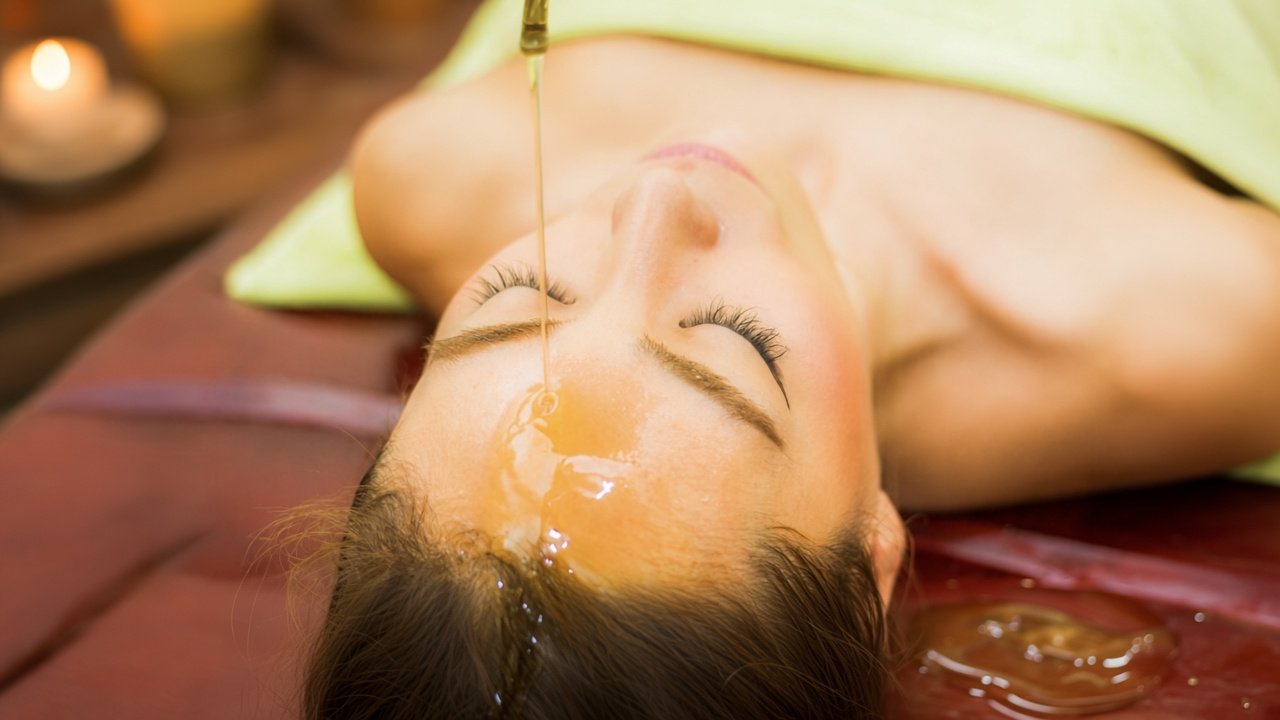
Shirodhara is a different treatment entirely. Rather than hands-on massage, it involves a continuous, gentle stream of warm oil poured across the forehead from a suspended vessel, typically preceded by a preparatory massage and followed by a scalp massage.
The experience of each is distinct. An Indian head massage feels more active and physical, working directly into tight muscles, while Shirodhara is a slower, more meditative treatment, often described as deeply calming precisely because there’s less physical manipulation involved and more sustained, rhythmic sensation.
Which one suits your needs depends on what you’re after. If muscular tension is your main concern, a head massage is usually the better starting point; if you’re seeking a deeply calming, meditative reset, Shirodhara tends to be the preferred choice. A quick consultation is the easiest way to figure out which fits you.
Curious About the Difference?
Book a Consultation to Explore Your Options
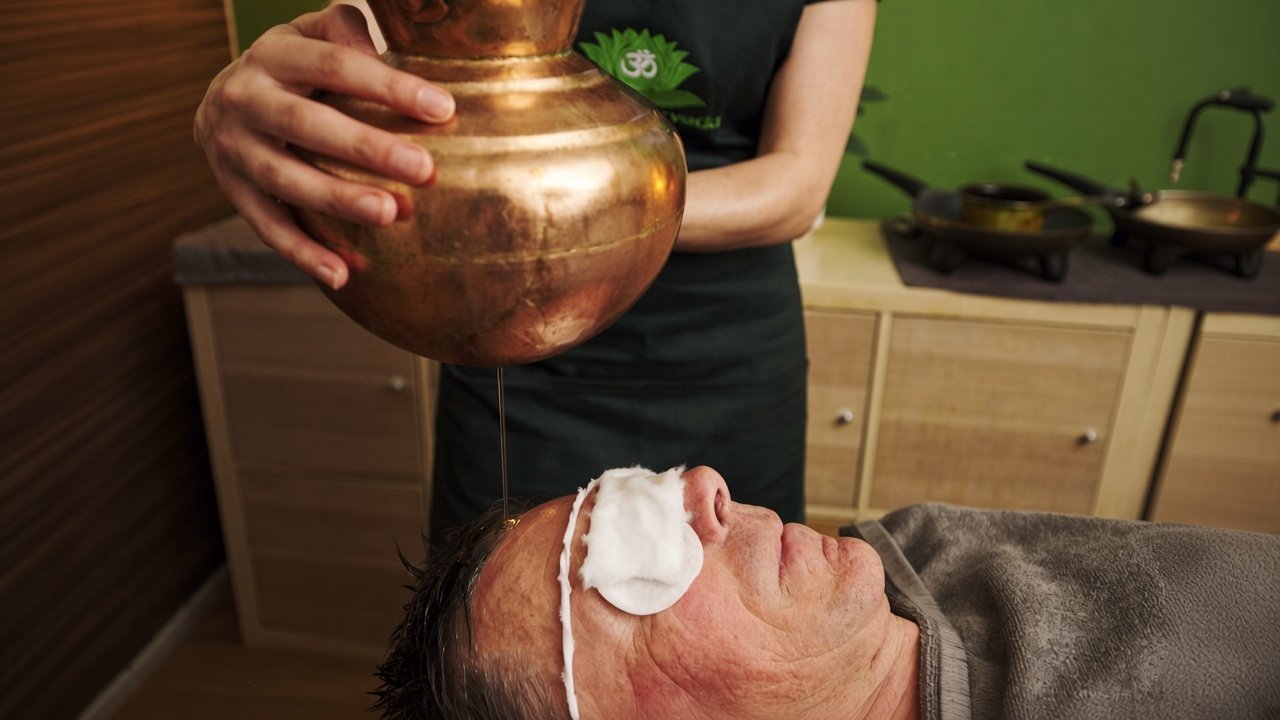
Your therapist will start by asking what brought you in. It might be stress, tight muscles, poor sleep, or just a wish to slow down. Your answers help them pick the right oil and adjust their touch. You’ll sit or lie down comfortably. Warm oil is worked into your scalp with slow, steady movements. The massage often includes your temples, neck, and shoulders too.
A session usually takes 30 to 60 minutes. It depends on whether you book it on its own or as part of a longer package.
Wear something you don’t mind getting a little oily near the collar. Try to leave some quiet time afterwards instead of going straight into a busy afternoon.
Both our Brisbane and Gold Coast clinics offer this treatment, so you can book at whichever is easier for you.
See current locations and booking options or look at our stress relief packages.
A good head massage does more than feel nice in the moment; it targets the exact places most of us hold stress without realising it. Whether you’re drawn to the hands-on technique of a classic Ayurvedic head massage or the slower, meditative pour of Shirodhara, both are available at our Brisbane and Gold Coast clinics, and a quick consultation can help you choose the right fit.
Book your session today and give your head and your mind a proper break.
This content is general wellness information and is not intended to diagnose, treat, cure, or prevent any medical condition. If you have a diagnosed health condition or persistent symptoms, please consult your doctor or another registered health professional.