
After a stressful week, you might be looking forward to a long weekend to slow down and recharge. But what should you choose: a few hours of Abhyanga and Shirodhara, or several days of guided Panchakarma? It’s a common question, and the answer really comes down to what you’re looking for, how much time you have, and what feels right for you at the moment.
A half-day retreat and multi-day Panchakarma both come from the same Ayurvedic tradition, but they’re built for different purposes. One is a single, self-contained session. The other is a structured program that unfolds over several days under close supervision by practitioners. Below, we’ll walk through what each involves, who tends to benefit from each, what they cost in Brisbane, and how to decide which fits where you are right now.
Ready to find the right Ayurvedic experience for you? Explore our Ayurvedic Retreat and detox Panchakarma programs to see what each option includes and choose the one that best suits your needs.
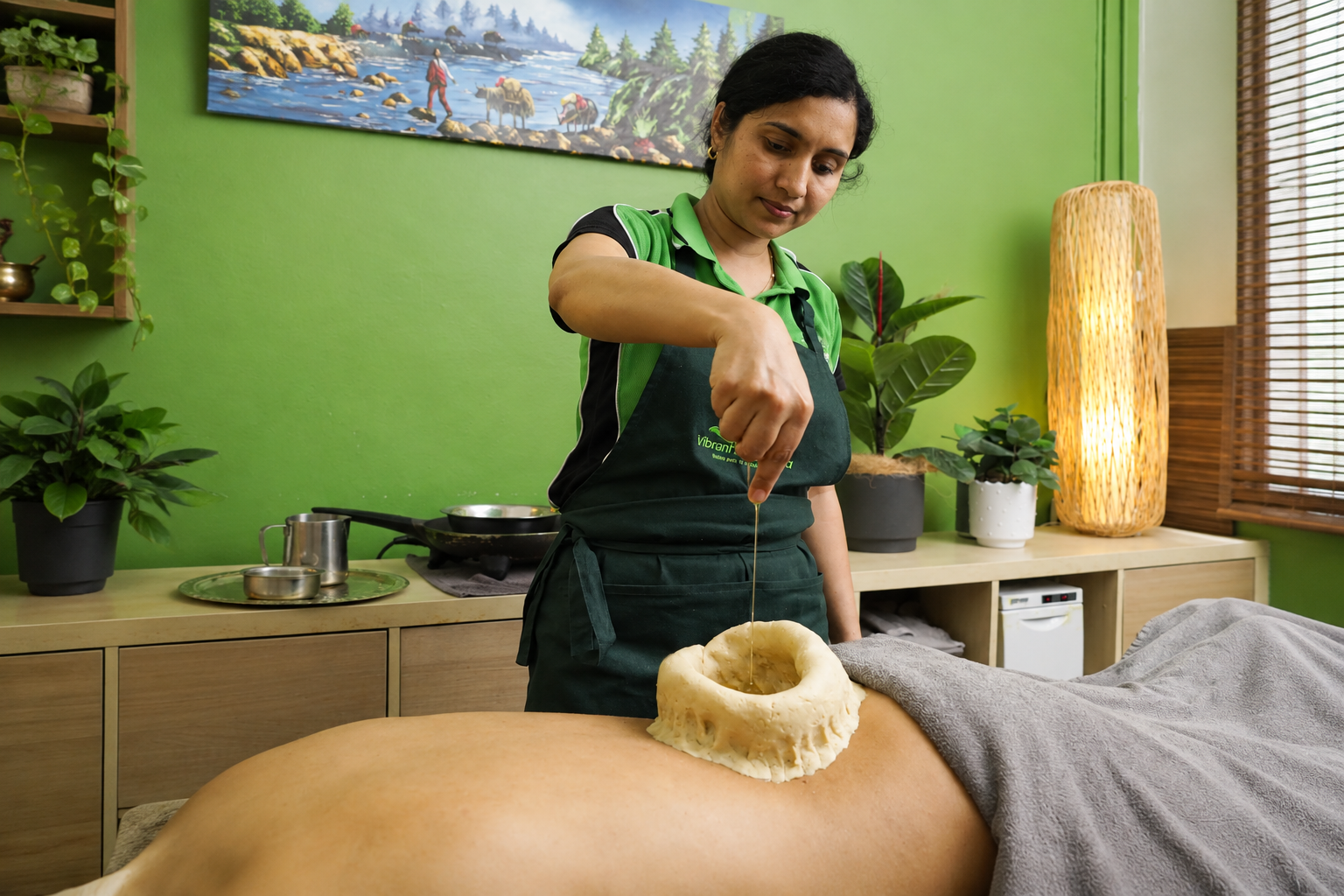
A half-day Ayurvedic retreat is a single, guided session designed to fit into one morning or afternoon. It starts with a short consultation, where your practitioner asks about your current stress levels, sleep, digestion, and any areas of tension, then shapes the session around what you describe.
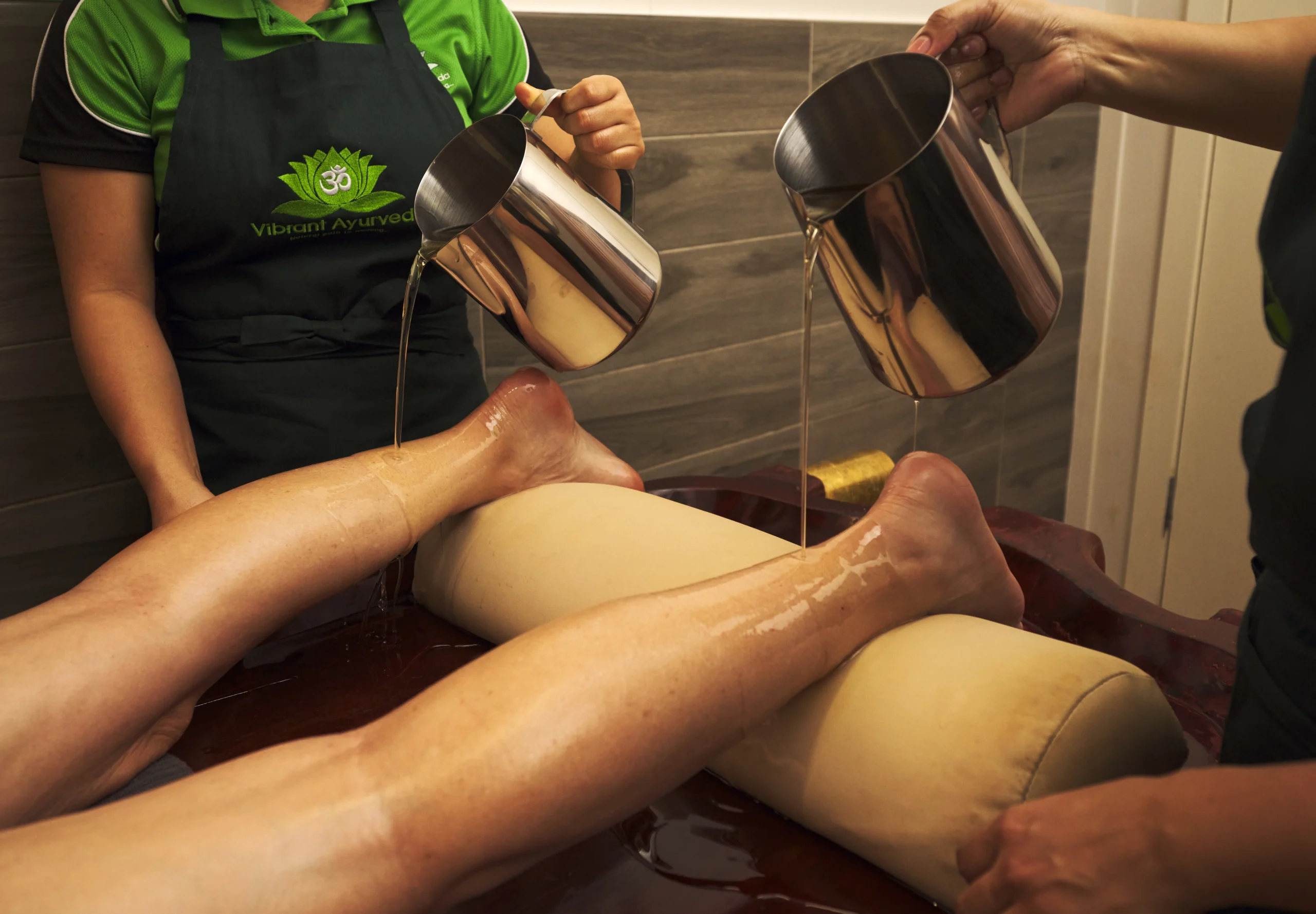
From there, the session typically moves through a sequence: an Abhyanga warm-oil massage to ease muscular tension, Shirodhara (a slow, continuous stream of warm oil poured across the forehead) to support a sense of calm, and Udvartana, a herbal powder massage traditionally used to improve circulation and skin texture. Many retreats close with a short steam session and a quiet rest period, giving your body time to settle before you head back into your day.
The half-day format exists for people who want the experience of an Ayurvedic reset without committing several days to it. It’s a complete session in its own right, not a shortened or “lite” version of anything, built around therapies that can be delivered safely and effectively in a single visit.
Ready to experience it? Explore the Half-Day Ayurvedic Retreat Package →
Panchakarma treatment is a structured, multi-day Ayurvedic program, not a single appointment. The word means “five actions,” referring to five classical therapies traditionally used to support the body’s own elimination processes: Vamana, Virechana, Basti, Nasya, and Raktamokshana. In a modern clinical setting, a Panchakarma program is generally built around a subset of these, adapted to what’s appropriate and safe for the individual.
The program itself runs in three phases. Purvakarma is the preparation stage, where oil-based therapies and a specific diet help ready the body for the main treatments. Pradhankarma is the core phase, where the main Panchakarma therapies are administered under practitioner supervision. Paschatkarma is the recovery stage, focused on a gradual return to normal diet and routine, since the body needs time to re-settle after intensive treatment.
Because Panchakarma involves this staged process, it can’t be compressed into a few hours. According to the Better Health Channel, the Victorian Government’s health information service, Panchakarma is one of a range of treatments used within Ayurvedic medicine alongside yoga, herbal medicine, and massage therapy, and each is applied according to individual assessment. This is also why Panchakarma calls for closer, ongoing practitioner involvement than a single retreat session does; your practitioner is tracking how your body responds across days, not just within one appointment.
Want the full breakdown? Learn more about our Panchakarma Detox Program →
The two options sit at different points on almost every axis that matters when you’re deciding between them.
A half-day retreat is exactly what it sounds like: one session, typically three to four hours, booked once. Multi-day Panchakarma is a program spanning several consecutive days (often five to seven, sometimes longer), with each day building on the last. You can’t split a Panchakarma program across unrelated weeks and expect the same outcome; the sequencing is part of how it’s designed to work.
A half-day retreat works on the surface layer: muscular tension, immediate stress, a sense of overstimulation. Panchakarma is a deeper, more involved process that works through preparation, treatment, and recovery phases across multiple days, with diet and lifestyle adjustments built into the program rather than confined to a single visit.
In a half-day retreat, your practitioner adapts the session in the moment, based on the initial consultation. In Panchakarma, your practitioner is monitoring you day to day, adjusting the program’s pace and intensity based on how your body is responding, which is part of why it requires more direct clinical oversight than a single session does.
If you’re a busy professional squeezing self-care between meetings, a half-day retreat is usually the more realistic starting point. It fits into a Saturday morning or a day off without requiring you to clear your calendar for a week, and it still delivers a genuine reset rather than a rushed version of one.
It also suits first-timers. If you’ve never experienced Ayurvedic massage or Shirodhara before, a half-day session is a low-commitment way to find out how your body responds to these therapies before considering anything longer. There’s no obligation to “graduate” to Panchakarma afterwards; plenty of people return to half-day sessions on their own regularly, simply as a recurring stress-relief practice.
It’s a good fit, too, for one-off situations: before a big event, after a period of high workload, or any time you want a few hours of genuine downtime rather than a structured health program. If that sounds like where you’re at, you can see current time slots and what’s included on the half-day Ayurvedic retreat package page.
Panchakarma tends to suit people looking for something more sustained than a single session can offer. This includes people managing ongoing wellness goals rather than a one-off dip in energy, where a structured, multi-day program with dietary guidance gives more scope to work through than a single afternoon does.
It’s also commonly chosen around seasonal transitions. In Ayurvedic tradition, certain times of year are considered better suited to a deeper reset, and clients often book a Panchakarma program at the change of season as part of an annual routine rather than a response to any specific issue.
If you’re already receiving ongoing Ayurvedic care, regular consultations, herbal support, or routine massage, a multi-day Panchakarma program can sit alongside that as a more intensive component of your broader plan. As with any complementary therapy, if you have an existing health condition or are taking prescribed medication, it’s worth discussing a Panchakarma program with your GP first, and telling your Ayurvedic practitioner about any medications or conditions before you begin. Full program structure and what to expect day by day is on the Panchakarma detox program page.
Ready for a deeper reset? Explore our Panchakarma Detox Program →
Cost is often the deciding factor once people understand the time difference, so here’s how the two compare in broad terms.
Half-day Ayurvedic retreat | Multi-day Panchakarma | |
Typical duration | One session, 3–4 hours | Multiple consecutive days |
Structure | Single guided sequence | Preparation, treatment, and recovery phases |
Practitioner involvement | One consultation, one session | Daily monitoring and adjustment |
Best suited to | One-off reset, first-time visitors, busy schedules | Sustained wellness goals, seasonal programs |
Investment | Lower, single fixed price | Higher, priced per program length |
Because Panchakarma spans multiple days and includes ongoing practitioner time, dietary guidance, and staged therapies, it’s priced as a program rather than a single-session fee, which naturally puts it above a half-day retreat in total cost. If you’re comparing Panchakarma Brisbane options more broadly, it’s worth checking what’s actually included in the quoted price: some providers separate consultation fees from the treatment days themselves, so the headline number isn’t always the full picture. For an exact, current quote based on your circumstances, the retreat and Panchakarma pages linked above both list contact details for a personalised consultation.
Compare full inclusions on the Half-Day Ayurvedic Retreat Package → and Detox Panchakarma page.
These two options aren’t mutually exclusive, and a fair number of clients use one to lead into the other. A half-day retreat is a practical way to try Ayurvedic therapies for the first time, see how your body responds to warm-oil massage and Shirodhara, and get a feel for the practitioner and clinic before committing to a longer program.
If that first session goes well and you’re curious about something more structured, the retreat consultation is also a natural point to discuss whether a multi-day Panchakarma program would suit your goals. Your practitioner can use what they learned during the half-day session to help shape recommendations for a longer program, rather than starting from scratch.
Equally, plenty of people never move past the half-day format, and that’s a perfectly valid ongoing routine on its own. There’s no set path you’re expected to follow; the two exist as separate options, and where you start (and whether you continue) comes down to what you’re looking for and how your schedule allows for it.
Not sure whether to start with a half-day retreat or explore Panchakarma? Book an Ayurvedic consultation to discuss your goals, ask questions, and get personalised guidance on which approach may be suitable for you.
Whichever option you book, the process starts the same way: a consultation. The practitioner will ask about your current health, stress levels, sleep, digestion, and any areas of concern, and use that to shape the session or program ahead of you.
For a half-day retreat, bring comfortable clothing you don’t mind getting a little oil on, and plan to arrive without a tight schedule immediately afterwards; the point is to leave unhurried, not to rush from the table to your next meeting. For a Panchakarma program, the practitioner will likely walk you through dietary guidance for the days before and after treatment, since the preparation and recovery phases are part of what makes the program effective.
Vibrant Ayurveda operates clinics across Brisbane and the Gold Coast, so it’s worth confirming which location suits your program when you book. Both the half-day retreat and Panchakarma pages linked above include booking details and clinic locations, and the team is happy to talk through which option makes sense for you before you commit to either.
Have questions before you book? Contact the Vibrant Ayurveda Team for full booking details if you have any queries.
If you’re still weighing up which option fits your week, start with a consultation; it’s the same first step for both, and our practitioner can help you decide from there. Browse the half-day Ayurvedic retreat package for a single-session reset, or explore the Panchakarma detox program if you’re ready for something more sustained. Either way, our Brisbane and Gold Coast clinics are ready to help you find the right starting point.
This content is general wellness information and is not intended to diagnose, treat, cure, or prevent any medical condition. If you have an existing health condition or take prescribed medication, please consult your doctor before beginning any Ayurvedic program.