If you’ve been researching Ayurvedic massage in Brisbane, you’ve probably come across two names that sound similar but describe very different treatments: Kalari massage and Abhyanga. Both come from India’s traditional wellness systems, both use warm herbal oils, and both are offered at Vibrant Ayurveda. Past that, they part ways.
Kalari massage grew out of Kalaripayattu, the martial art of Kerala, and was originally used to condition and recover the bodies of warriors. It’s a targeted, pressure-based technique. Abhyanga, on the other hand, is the classical Ayurvedic full-body oil massage described in ancient texts like the Charaka Samhita, built around whole-body balance rather than one area of the body.
Choosing between the two isn’t about which is “better.” It’s about the differences in technique, pressure, pace, and overall treatment experience, and which approach you prefer. This guide breaks down the origins, technique, pressure, and pacing of each, then walks through how to work out which one fits your situation, and how a consultation at Vibrant Ayurveda helps you get it right the first time.
Still unsure which massage is right for you?
Explore Ayurvedic massage treatments at Vibrant Ayurveda in Brisbane and choose between Kalari massage, Abhyanga and other traditional therapies.
Massage therapy includes a range of techniques that differ in pressure, movement and treatment approach. Healthdirect provides an overview of different types of massage and explains that massage is generally considered a complementary therapy. At Vibrant Ayurveda, our Ayurvedic massage menu includes several traditional therapies alongside Kalari and Abhyanga, such as Shirodhara, which involves a steady flow of warm oil over the forehead, and Udvartana, a traditional herbal powder massage.
Kalari and Abhyanga sit at opposite ends of that spectrum. Kalari is precise and pressure-driven. Abhyanga is broad and rhythmic. Knowing where each one fits makes it much easier to work out which session will actually address what’s bothering you, rather than picking a treatment because it sounds appealing on a menu.
In Ayurveda, treatment selection isn’t generic. Practitioners look at your prakriti (your baseline constitution) and your current state, then match the technique, oils, and pressure accordingly. Within Ayurvedic practice, practitioners may consider a person’s constitution and current circumstances when discussing treatment options, including the technique, oils, and pressure used during a session.
For general information about complementary medicines and the importance of considering evidence when evaluating health treatments, see the NHMRC information on complementary medicines.
For regulated health service advertising, claims about the effectiveness of a service should be supported by acceptable evidence. See AHPRA’s guidance on acceptable evidence in health advertising for further information.
This is why Vibrant Ayurveda doesn’t recommend booking blind. A short conversation with one of our practitioners, ideally before your first session, means the oils, pressure, and duration are chosen for your body on that day, not a generic template.
Kalari massage, sometimes called Kalari Chikitsa or Chavutti Thirumal (literally “foot massage”), comes from Kerala’s Kalaripayattu tradition, one of the oldest documented martial arts systems in the world. Kalari massage developed as the recovery system for that training, using warm medicated oils to keep muscle tissue supple and joints mobile between sessions. Over centuries, the same techniques were adapted for general wellness use.
What sets Kalari apart is the application method. Rather than relying solely on hands, many Kalari sessions use the therapist’s foot, often with the support of an overhead rope for balance and control, to apply long, even strokes of pressure along the muscles and joints. It sounds unusual if you haven’t experienced it, but the use of the foot allows the practitioner to apply sustained pressure across larger areas of the body.
Kalaripayattu training is demanding on the body; deep stances, high kicks and rapid direction changes all place load on the hips, hamstrings, shoulders and spine. Kalari massage developed as the recovery system for that training, using warm medicated oils to keep muscle tissue supple and joints mobile between sessions. The oils used are typically herb-infused and warmed before application, chosen to suit the season and the individual’s constitution.
Because the technique was built for people in active physical training, it carries a different character to more meditative massage styles. It’s brisk, it’s structured, and the pressure is noticeably firmer than a relaxation-focused treatment.
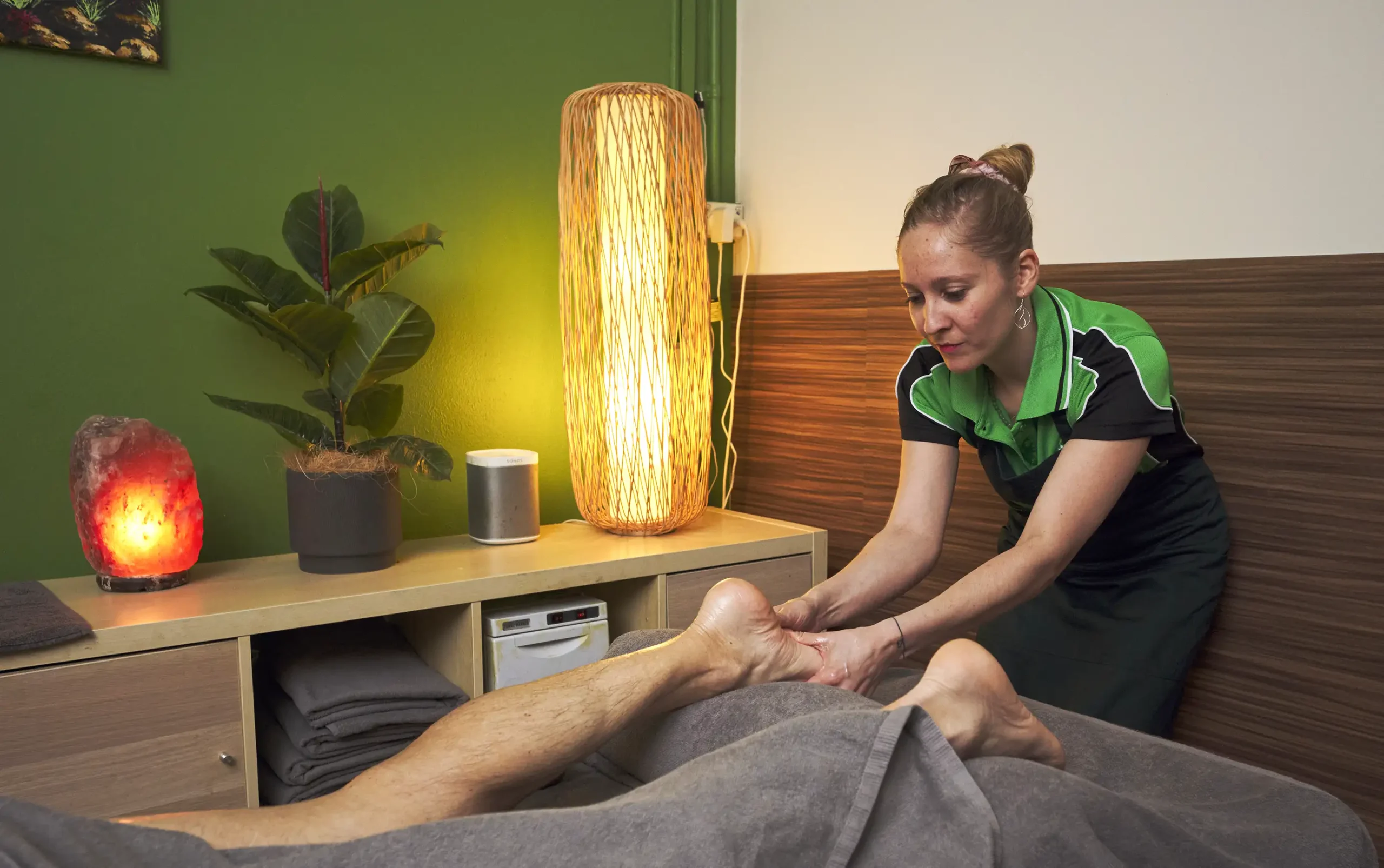
A typical Kalari massage Brisbane session at Vibrant Ayurveda starts with warm herbal oil applied to the body, followed by long, sweeping pressure strokes delivered along the length of the muscles rather than in small circular motions. Sessions often move through the legs, back, shoulders and arms in a set sequence, with particular attention to areas you flag as tight or sore.
Because the pressure is firmer than many people expect from a traditional “spa massage,” it’s worth mentioning any recent injuries, sensitive areas or medical conditions to your therapist beforehand. Kalari generally involves firmer pressure than a relaxation-focused massage. Pressure levels can be discussed with the practitioner before and during the session. As with any firm-pressure massage, individual responses can vary. Tell your practitioner about any areas of sensitivity, injury, or discomfort before the session.For general information about massage safety, potential risks and when to seek medical advice, see Healthdirect’s information on massage therapy.
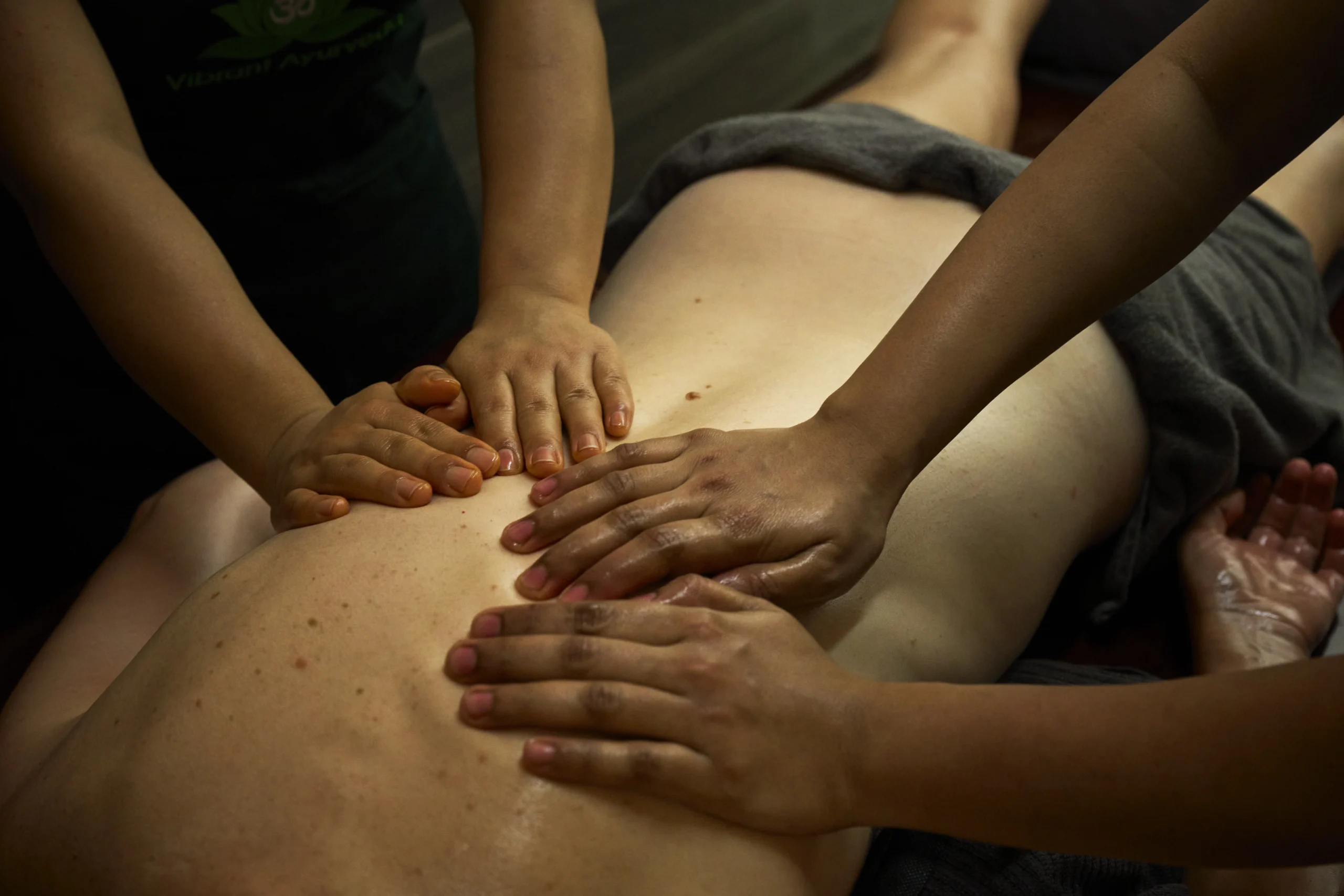
Abhyanga is the classical Ayurvedic full-body oil massage, described in foundational Ayurvedic texts as a daily self-care practice as well as a treatment. The word itself comes from the Sanskrit “anga” (limb) and the prefix “abhi” (towards), and the technique is built around covering the entire body with warm, herb-infused oil using long, synchronised strokes.
Unlike Kalari’s precision work, Abhyanga is holistic by design. It’s traditionally used to support the body as a whole system, working with the doshas rather than isolating one muscle group or joint.
The oil used in Abhyanga is central to the treatment. Different oils and herb infusions are chosen depending on your dosha and the season, warming, grounding oils for Vata imbalances, cooling oils for Pitta, and lighter, stimulating oils for Kapha. The oil is warmed before application and used generously, both to nourish the skin and to allow the practitioner’s hands to move smoothly across the body without friction.
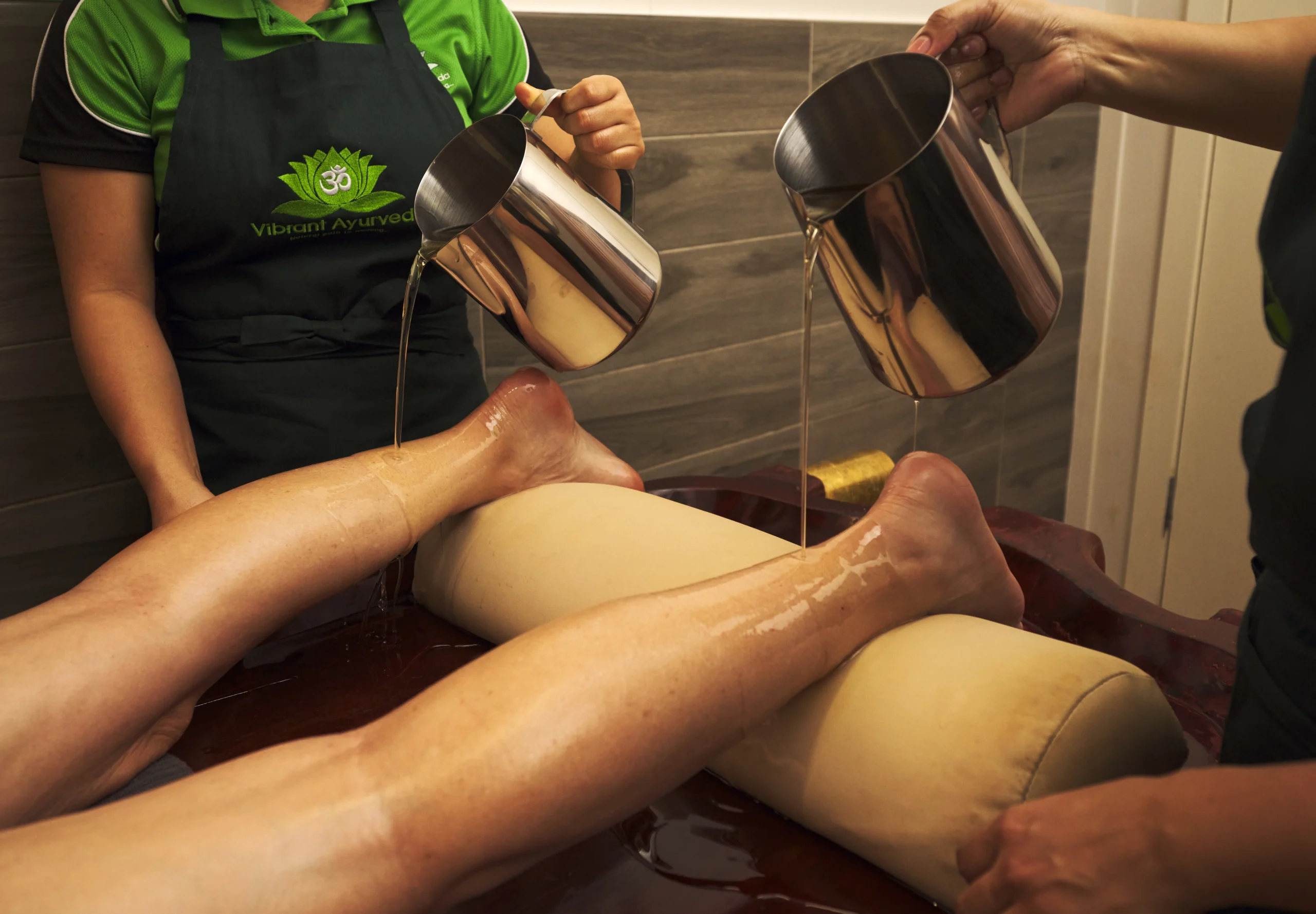
Two practitioners often work in tandem during a full Abhyanga session, moving in mirrored, synchronised strokes down each side of the body. The treatment uses a steady, synchronised rhythm, with the pace and application of oil forming an important part of the traditional technique, though it’s worth noting Ayurvedic massage is a complementary therapy and isn’t a substitute for medical treatment of diagnosed conditions.
An Abhyanga session moves at a measured, even pace, covering the scalp, face, limbs, back and abdomen with long strokes and gentle joint movements. There’s no isolated deep-tissue work in the way Kalari applies it; the strokes are broad and continuous, designed to treat the body as one connected system rather than a set of separate muscle groups.
Abhyanga uses slower, flowing and synchronised strokes, creating a treatment experience that differs from the firmer, more targeted pressure used in Kalari. Because the oil is applied liberally, it’s worth planning your day around the appointment, wearing older clothes and allowing time afterwards rather than rushing straight back to a desk.
The simplest way to distinguish the two is by their technique: Kalari uses more targeted, firmer pressure, while Abhyanga uses broader, flowing strokes across the body. One is built for muscular recovery in specific areas; the other is built for whole-body, whole-system support. Below is how that plays out across the details that actually matter when you’re choosing between them.
Kalari massage concentrates pressure along specific muscle groups and joints, often responding directly to areas you identify as tight, overused, or sore. It’s closer in spirit to remedial or sports massage in its focus, even though the technique and philosophy behind it are entirely different.
Abhyanga, by contrast, treats the body as a single connected system. The strokes move continuously across the whole body rather than concentrating on any one region, and the goal is broader than muscular relief; it’s about supporting circulation, the nervous system and overall balance according to Ayurvedic principles.
If you’ve got a specific problem area, Kalari’s targeted approach tends to be more directly relevant. If you’re after full-body support rather than a fix for one spot, Abhyanga is built for exactly that.
Pressure is the most noticeable difference between the two techniques. Kalari is firm, sometimes intense, and applied with sustained, even strokes, occasionally using the feet rather than hands. Abhyanga uses lighter, flowing pressure delivered almost entirely by hand, with an emphasis on rhythm and continuity rather than depth.
Pace follows the same pattern. Kalari sessions move with more structure and intent behind each stroke, working systematically through tight areas. Abhyanga generally moves at a slower pace, using continuous, flowing strokes rather than the firmer, targeted pressure associated with Kalari.
Both use warm, herb-infused oils, but the oils are often selected differently. Kalari oils may be selected according to the traditional Ayurvedic approach used by the practitioner, while Abhyanga oils may be selected according to the individual’s Ayurvedic assessment and the season. While Abhyanga oils are selected primarily according to dosha balancing, adjusted to your constitution and the season.
If you prefer a treatment with more targeted pressure, Kalari may be of interest; if you prefer a full-body treatment with slower, flowing strokes, Abhyanga may be of interest. If you prefer a slower, full-body treatment rather than targeted pressure, Abhyanga offers a different treatment style and pace.
These descriptions refer to traditional Ayurvedic practice rather than established medical treatments. As with other complementary therapies, Ayurvedic massage should be considered alongside appropriate conventional healthcare rather than as a replacement for medical diagnosis or treatment. Healthdirect provides further information about complementary therapies.
For information about advertising requirements for regulated health services in Australia, see AHPRA’s Guidelines for advertising a regulated health service.
There’s no universal answer here, and that’s exactly why a quick chat with a practitioner before booking makes a real difference. That said, most people find one of the two approaches described below fits their situation more naturally.
If you train regularly, sit at a desk for long stretches, or carry noticeable tightness in specific muscle groups, Kalari massage is generally the more relevant option. The firm, targeted pressure is designed to work directly on the areas causing discomfort, rather than spreading attention evenly across the whole body. People who’ve tried remedial or sports massage before and found the pressure level suited them tend to adapt well to Kalari.
If your main concern is winding down after a stressful period, supporting sleep quality, or simply wanting a slower, more restorative experience, Abhyanga tends to be the better fit. The rhythmic, full-body strokes are traditionally associated with calming the nervous system, and the pace itself is part of the therapeutic effect. This is often the treatment people return to during particularly demanding stretches of work or life.
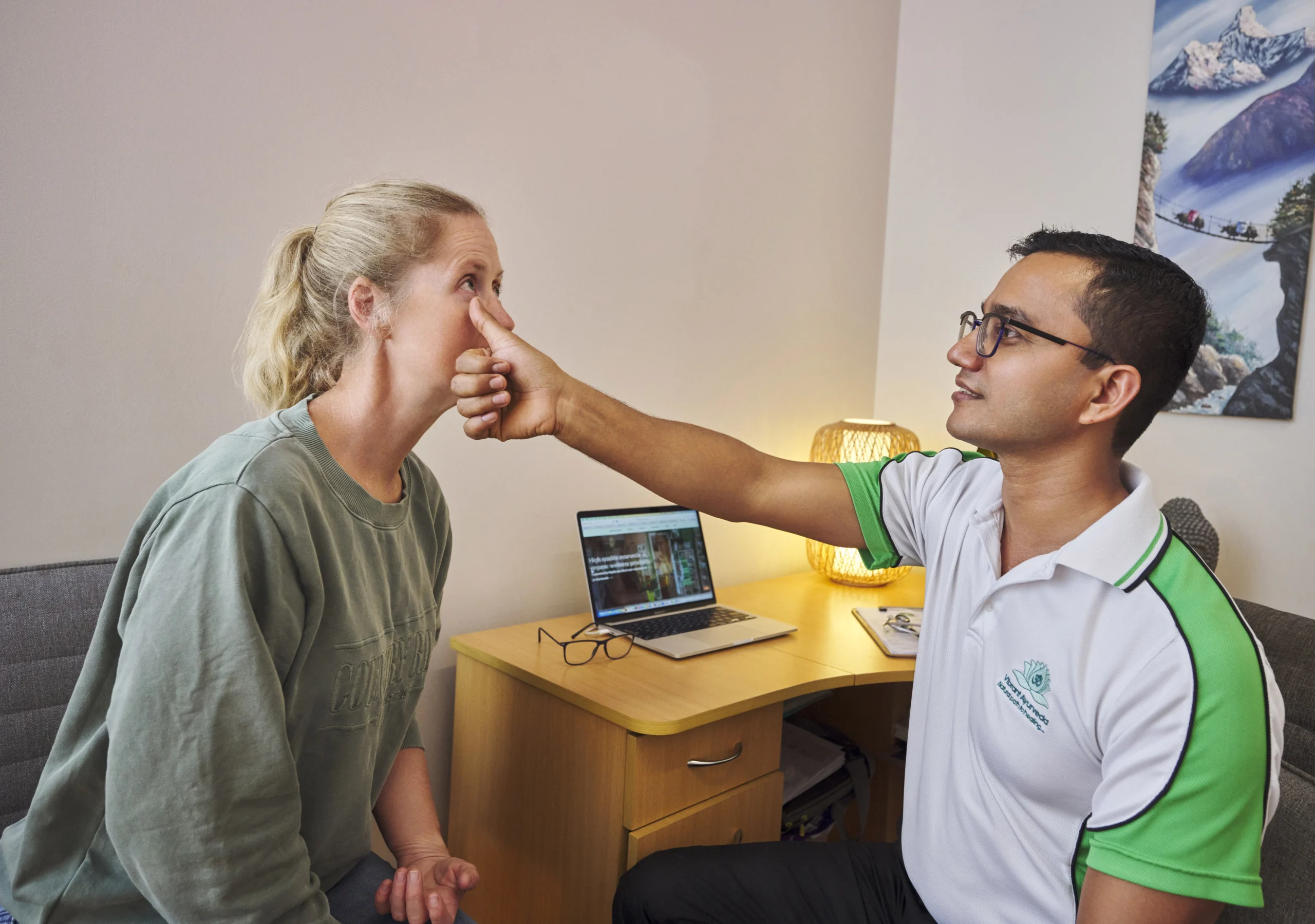
Before your first Kalari or Abhyanga session, we recommend a consultation with one of our practitioners, including our Vaidya, Dr Pradeep Neupane. This isn’t a formality; it’s how we work out your dosha, flag anything relevant in your health history, and decide which technique, oils, and pressure level suit you on the day. If you have a current injury, a diagnosed medical condition, or you’re pregnant, this conversation matters even more, since some techniques and oils aren’t appropriate in every circumstance.
If you’re not sure which treatment to book, our team can talk you through the options over the phone or via our contact page before you commit to a time slot.
After either treatment, plan for a slower afternoon if you can. The oils used in both Kalari and Abhyanga are absorbed gradually, so avoiding a hot shower for a few hours afterwards helps the oil do its work rather than washing it straight off. Drinking water and eating something light rather than a heavy meal is generally recommended, and it’s worth avoiding strenuous exercise for the rest of the day, particularly after a firm-pressure Kalari session.
Individual responses to massage can vary. If you experience unexpected or persistent discomfort following a session, contact an appropriate healthcare professional. For general information about massage, including potential risks and precautions, see Healthdirect’s massage therapy information. If you experience anything beyond mild discomfort, or you have ongoing pain, get in touch with your GP.
Kalari and Abhyanga both draw on centuries of Ayurvedic tradition, but they solve different problems. Kalari works best when you’ve got specific muscular tension to address. Abhyanga works best when what you need is broader, whole-body support and a genuine chance to slow down. Neither is a substitute for medical care, and both work best when matched to your body by someone who knows what they’re looking at.
If you’re still not sure which one fits, book a consultation with Ayurvedic experts, or get in touch via our contact page, and we’ll help you choose between our Kalari massage and Abhyanga sessions before you book.